Who Owns High Noon? Ownership, Growth Strategy & Business Insights
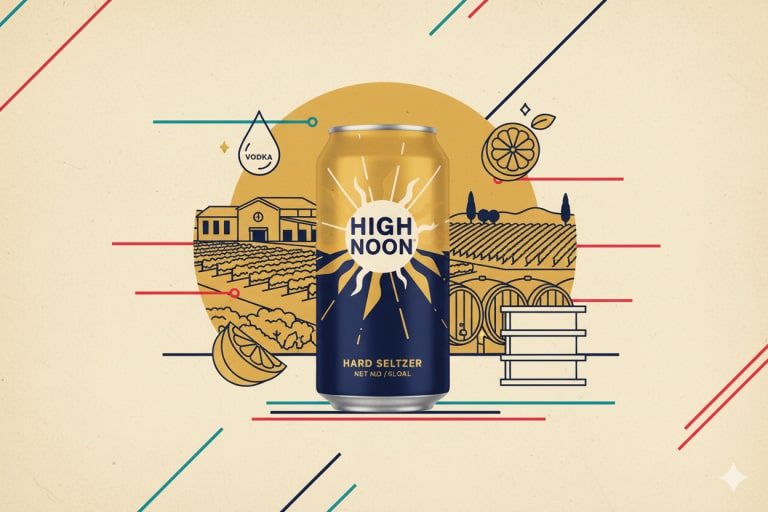
On the surface, High Noon looks like just another canned hard-seltzer. But dig deeper and you’ll uncover a compelling story of strategic positioning, swift growth, and smart ownership behind the scenes. Launched in 2019 and part of the rising spirits-based RTD (ready-to-drink) category, High Noon has grown so rapidly that by 2022 it surpassed $1 billion in sales and is now recognized as the top-selling spirits brand in the U.S. by volume.
In this article we’ll answer the core question of “who owns High Noon”, trace its brand journey, analyse market demand, competition, business model and extract actionable insights for your brand or business.
Brand Snapshot: What Is High Noon?
-
Introduced in 2019 by E. & J. Gallo Winery (now simply Gallo).
-
ABV: 4.5% (vodka-based seltzer).
-
In 2022, sales approached about $1.25 billion, establishing it as the #1 spirits brand in the U.S. by volume.
-
It expanded its line: tequila-based seltzers (2023) and vodka iced teas (2024) for diversification.
Who Owns High Noon? Ownership Structure Explained
Parent Company
Family Ownership & Heritage
Why This Ownership Matters
-
Being part of a large, diversified portfolio gives High Noon scale and distribution advantages.
-
Gallo’s investment and strategic pivot into spirits-based RTDs enabled the rapid growth of High Noon.
-
Contrary to some assumptions, neither Barstool Sports nor its founder owns High Noon—they are marketing partners.
Demand Analysis
-
The hard seltzer boom: the RTD category exploded in the late 2010s and early 2020s.
-
Consumer desire for “better-for-you” alcoholic options: vodka + real juice + gluten free = premium positioning.
-
The pivot from wine to spirits: Gallo recognized wine consumption was stagnating and needed a growth engine.
-
From a brand-builder’s viewpoint: identifying an unmet demand (premium canned cocktails) and delivering a distinctive formula (vodka + real juice) created a strong value proposition.
Competitive Landscape & High Noon’s Positioning
The RTD Category
High Noon’s Competitive Edge
-
Uses real vodka (not malt) which allowed differentiating.
-
Premium pricing and healthier perception: fewer calories, real fruit juice.
-
Strategic media partnerships (e.g., with Barstool) amplified reach.
-
Rapid flavor and product-line extension (tequila seltzers, iced teas).
Market Share
Business Model & Growth Strategy
Revenue Drivers
-
Premium cans at higher price-points than typical hard seltzers.
-
Broad retail distribution (supermarkets, convenience stores, online) facilitated volume growth.
-
Product line extensions increased wallet-share from existing consumers.
Strategic Moves
-
Gallo leveraged its distribution and operations infrastructure to scale.
-
High Noon’s marketing invested heavily to build brand-identity fast.
Sustainability & Risk
-
The spirits-RTD category is trending but still developing; High Noon must maintain authenticity and flavour quality to justify premium. From strategy viewpoint: A brand aligned with corporate backing + differentiating formula + scaled distribution can deliver outsized growth.
-
Strategic Insights for Brands & Marketers
| Insight | Commercial Insight | Explanation |
| 1 | Align brand formula with demand gap | High Noon used real vodka + real juice at a time when many seltzers were malt-based. Your brand should ask: “What key ingredient or formula sets us apart?” |
| 2 | Use parent-company strengths for scale | Gallo’s distribution and manufacturing enabled rapid rollout. Choose partners or operational models that give you scale. |
| 3 | Leverage premium positioning early | Pricing and packaging signalled premium status; this justified higher margins and brand loyalty. |
| 4 | Extend intelligently | High Noon extended into tequila seltzers and iced teas rather than stray from core identity. For you: keep line extensions coherent. |
| 5 | Market aggressively and authentically | High Noon’s partnership with media (Barstool) amplified relevance. Choose channels that amplify your story and brand voice. |
Future Outlook & Risks to Watch
Growth Paths
-
Continued category expansion (e.g., spirits-based RTDs globally).
-
Further innovation (new base spirits, mixology-inspired formats).
-
Elevated brand partnerships (sports, lifestyle).
Risks
-
Market saturation: hard seltzer fatigue may hit if flavour innovation slows.
-
Price sensitivity: premium product must maintain value perception.
-
Regulatory shifts: ingredients, labeling (example: recall due to mis-labeling). For your brand: plan for growth but build guardrails for authenticity and value.
FAQ
Q: Who owns High Noon?
A: It is owned by E. & J. Gallo Winery (Gallo) and operates under the Spirit of Gallo division.
Q: Is it true Barstool owns High Noon?
A: No, Barstool Sports helped with marketing but does not own the brand.
Q: Why is High Noon seen as “premium”?
A: Because it uses real vodka + real juice, positions as gluten free with fewer calories, and aligns with premium-pricing.
Conclusion
High Noon’s story is more than just a trendy canned drink—it’s a case study in strategic ownership, formula innovation and brand-scale execution. Its ownership by Gallo gave it industrial muscle; its formula gave it differentiation; and its marketing gave it cultural traction.
For any brand-builder or marketer, the takeaway is clear: align with demand, differentiate deeply, scale smartly—and treat your brand as a strategic asset, not just a product. The question of “who owns High Noon” is answered—but the question of how you build something equally meaningful remains yours to act on.