Who Owns BowFlex Now? Ownership, Bankruptcy, and What It Means for Buyers
For years, BowFlex has lived in American homes through SelectTech dumbbells, Max Trainers, TreadClimbers, and more. But when BowFlex began appearing in bankruptcy headlines in 2024, a wave of confusion swept across customers.
Is BowFlex still in business?
Who owns the brand now?
Will warranties and parts still be supported?
The full story is clearer than many expected — and it shows how dramatically the home-fitness industry has shifted in just a few years.
Who Owns BowFlex Today?
BowFlex is now owned by Johnson Health Tech (JHT), a Taiwan-based global fitness manufacturer best known for its Matrix, Horizon, and Vision Fitness brands.
JHT acquired the BowFlex brand and key assets in 2024 through a ~$37.5 million purchase after BowFlex’s parent company filed for Chapter 11.
The sequence of events is as follows:
-
2020–2021: The pandemic creates a historic surge in home-fitness demand, and BowFlex ramps up production.
-
2022: Gyms reopen; demand falls sharply, leaving BowFlex with excess inventory.
-
2023: Financial pressure intensifies as sales decline and competition increases.
-
Feb 2024: BowFlex’s parent company files for Chapter 11 bankruptcy protection.
-
May 2024: Johnson Health Tech purchases the BowFlex brand and assets, giving BowFlex a stable new home within a larger global fitness portfolio.
In short: BowFlex didn’t disappear — it changed hands, and today it operates with the backing and stability of a major international manufacturer.
Why BowFlex Filed for Bankruptcy and Was Ultimately Sold
BowFlex’s collapse and eventual acquisition weren’t sudden. They were the result of a multiyear shift in consumer behavior, industry trends, and operational challenges that intensified after the pandemic boom faded.
⭐ Problem
BowFlex could not sustain operations once demand normalized, and production levels remained far higher than what the market could absorb.
⭐ Cause
-
The company overproduced equipment during the home-fitness surge of 2020–2021.
-
When customers returned to gyms, BowFlex was left with massive unsold inventory.
-
Competitors like Peloton, Tonal, and NordicTrack accelerated innovation and captured market share.
-
Rising storage, logistics, and supply-chain costs further tightened BowFlex’s cash flow.
⭐ Impact
-
The parent company filed for Chapter 11 in February 2024.
-
During restructuring, JHT acquired the BowFlex brand and assets.
What JHT Actually Purchased
Assets Acquired:
-
BowFlex brand and intellectual property
-
Product designs + patents
-
E-commerce system and customer channels
-
Select operational assets
Assets Not Acquired:
-
Old liabilities
-
Corporate debt
-
Pre-bankruptcy obligations
Freed from its liabilities, BowFlex became exactly the kind of brand JHT could step in and rebuild — which is why the acquisition made sense.
How JHT Sees the BowFlex Opportunity
| Strategic Insight | What It Means |
|---|---|
| Brand Equity Acquisition | BowFlex still has strong name recognition in the U.S. |
| DTC Channel Expansion | BowFlex’s e-commerce presence accelerates JHT’s consumer reach. |
| Portfolio Synergy | BowFlex strengthens JHT’s home-fitness offerings. |
| Manufacturing Optimization | JHT’s supply chain lowers costs, improves reliability. |
| Competitive Positioning | A stronger stance against Peloton, Tonal, and NordicTrack. |
What Happens to BowFlex Products Now?
Under JHT, BowFlex isn’t going away — it’s entering a more stable, better-supported phase. Here’s what that means in simple terms:
-
BowFlex products will continue to be sold.
-
Manufacturing and inventory will become more stable.
-
Customer service and warranty support should improve.
-
Replacement parts will remain available.
-
Product designs may evolve with JHT’s engineering resources.
-
Existing BowFlex equipment remains fully usable.
BowFlex is now in a more stable position than it has been in years. Under JHT, the brand benefits from:
-
Global-scale manufacturing
-
Stronger support infrastructure
-
A cleaner financial foundation
-
The opportunity for a modern product refresh
While rebuilding trust takes time, BowFlex now has the resources to do it.
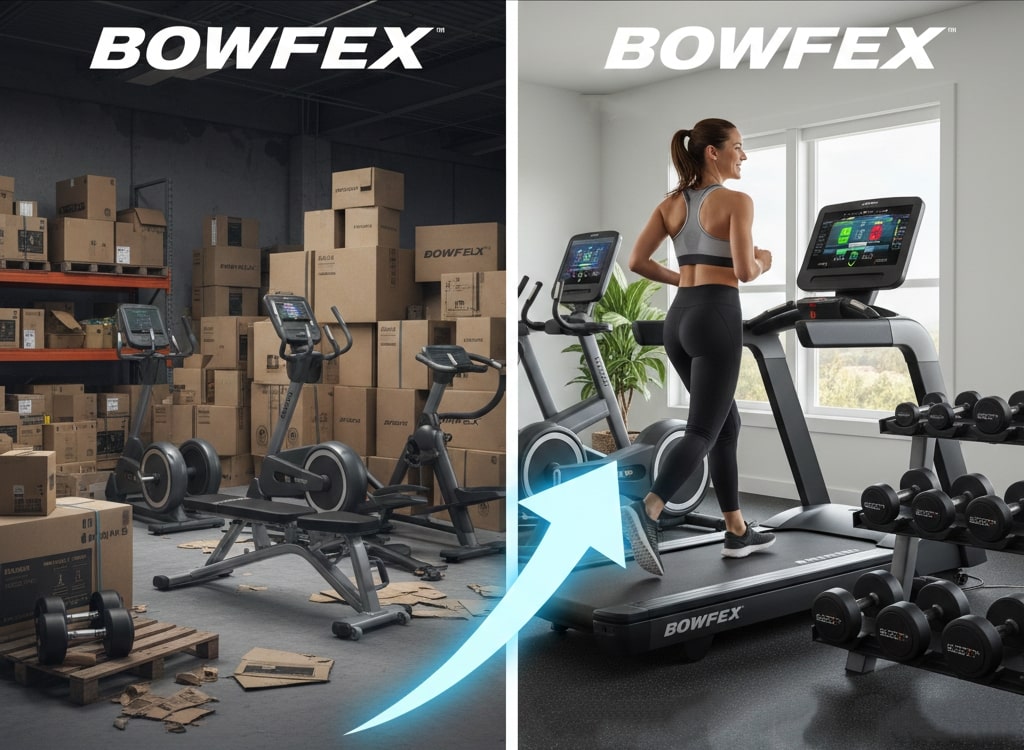
BowFlex Before vs After Acquisition
| Before (Pre-2024) | After (Under JHT) |
|---|---|
| Erratic inventory supply | Streamlined production via JHT |
| Slower warranty response | Global support infrastructure |
| Higher manufacturing costs | Optimized, lower-cost production |
| Limited R&D investment | Larger engineering and design capabilities |
| Brand weakened by bankruptcy | Opportunity for full market repositioning |
What This Means for You
For current owners, the acquisition brings stability.
Support will be smoother, parts easier to find, and warranties backed by a stronger company.
For new buyers, BowFlex remains a dependable pick.
With JHT overseeing engineering and production, future products will likely be more consistent and durable.
And for the brand’s future, there is room for optimism.
JHT has the scale and experience to help BowFlex rebuild, refresh its lineup, and compete again.
Trust will take time to restore — but the direction is finally upward.
FAQs
Is Johnson Health Tech a reliable company?
Yes. JHT is a major fitness-equipment manufacturer with strong global operations and a solid reputation.
Why is everyone selling their BowFlex equipment?
Uncertainty during bankruptcy led to a temporary sell-off — not a product failure.
Are BowFlex warranties still valid?
Yes. JHT now handles support.
Why didn’t BowFlex merge with another U.S. fitness company instead of selling to JHT?
JHT made the strongest offer during the bankruptcy sale and had the best ability to support the brand.
Is BowFlex likely to be integrated into JHT’s Matrix or Horizon product lines?
No. BowFlex will stay a separate brand, though it may benefit from shared engineering improvements.
Will BowFlex prices change now that JHT owns the brand?
Prices may adjust over time, but most products currently remain in the same range.
Conclusion
BowFlex’s bankruptcy marked the end of one era, not the end of the brand. With JHT in control, the name steps into a far more stable ecosystem—one built for longevity, not survival mode.